
Fire Door Ratings Explained
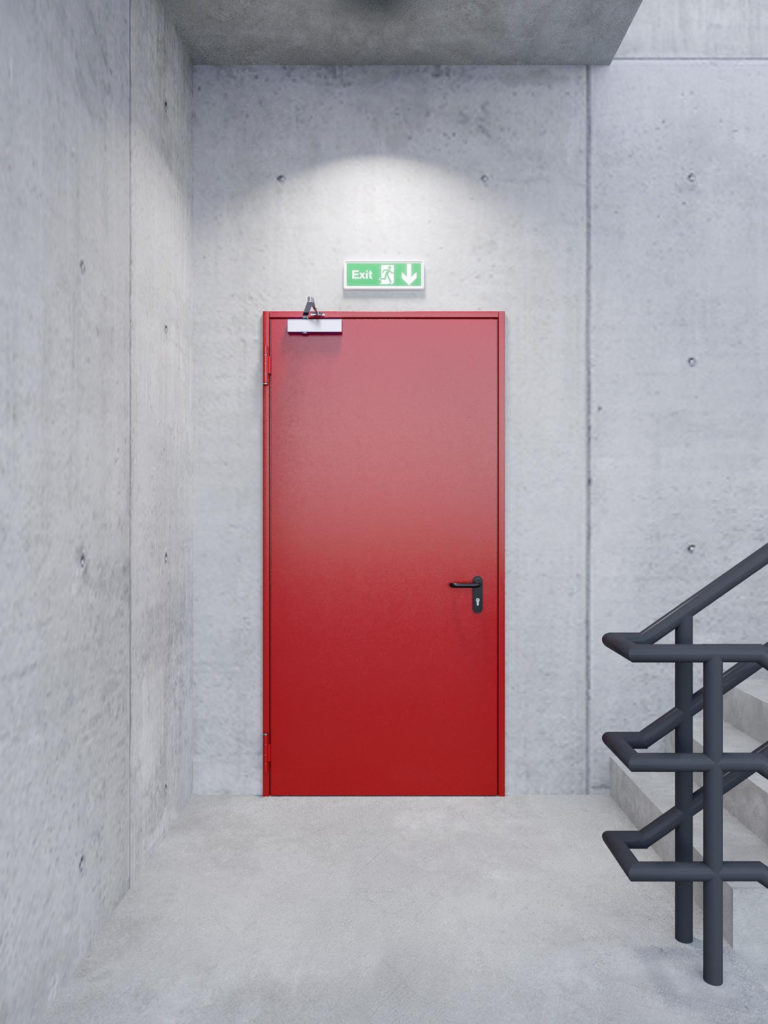
Before exploring the types themselves, it’s important to understand fire door ratings. Every certified fire door is tested and assigned a rating, showing how long it can withstand fire exposure before failing. This is expressed as FD followed by the number of minutes of protection provided:
- FD30 – 30 minutes of fire resistance
- FD60 – 60 minutes
- FD90 – 90 minutes
- FD120 – 120 minutes
The fire door’s performance is assessed in a controlled environment where it’s exposed to extreme heat and pressure. These tests confirm how well the door, frame, and seals prevent flames and smoke from spreading.
Choosing the right fire door rating depends on your building’s fire safety plan and layout. For example, residential buildings and small offices often use FD30 doors, while hospitals, schools, and industrial premises may require FD60 or above.
Types of Fire Doors by Material
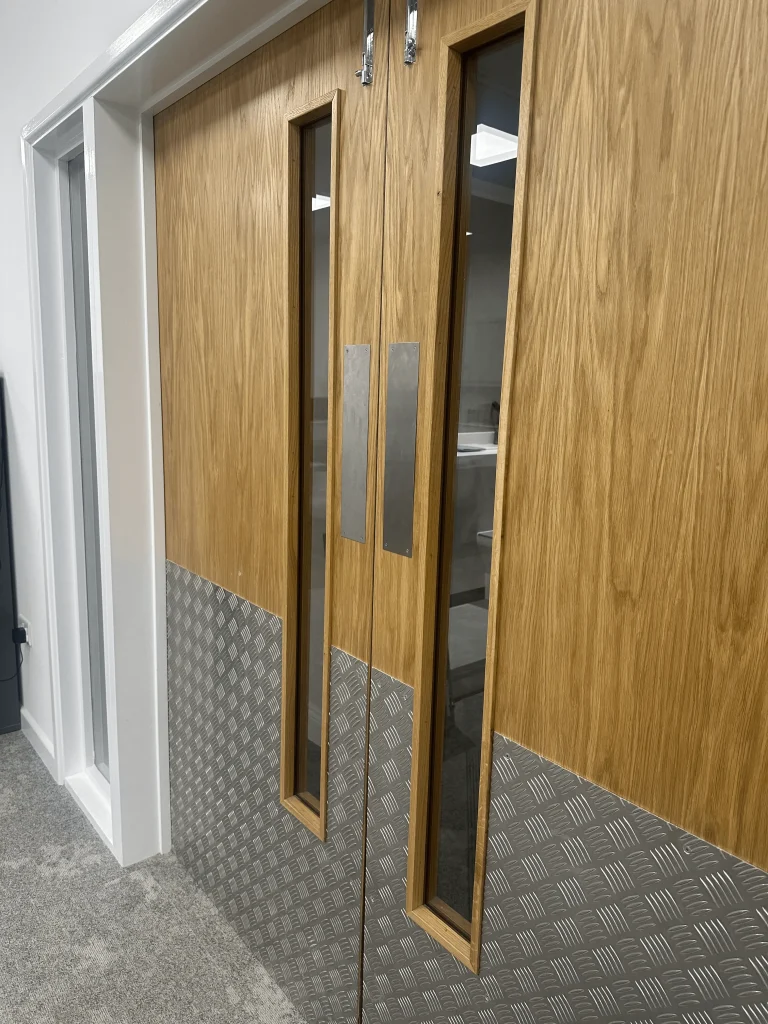
Timber Fire Doors
Timber fire doors are a popular choice for internal applications due to their balance of aesthetics and protection. They can be designed in a range of finishes — from painted to veneered — and can also include glazed panels made from fire-rated glass.
The core of a timber fire door contains layers of fire-resistant material, designed to expand under heat to prevent smoke leakage. These doors are commonly found in offices, apartment blocks, and commercial spaces where both safety and style matter.
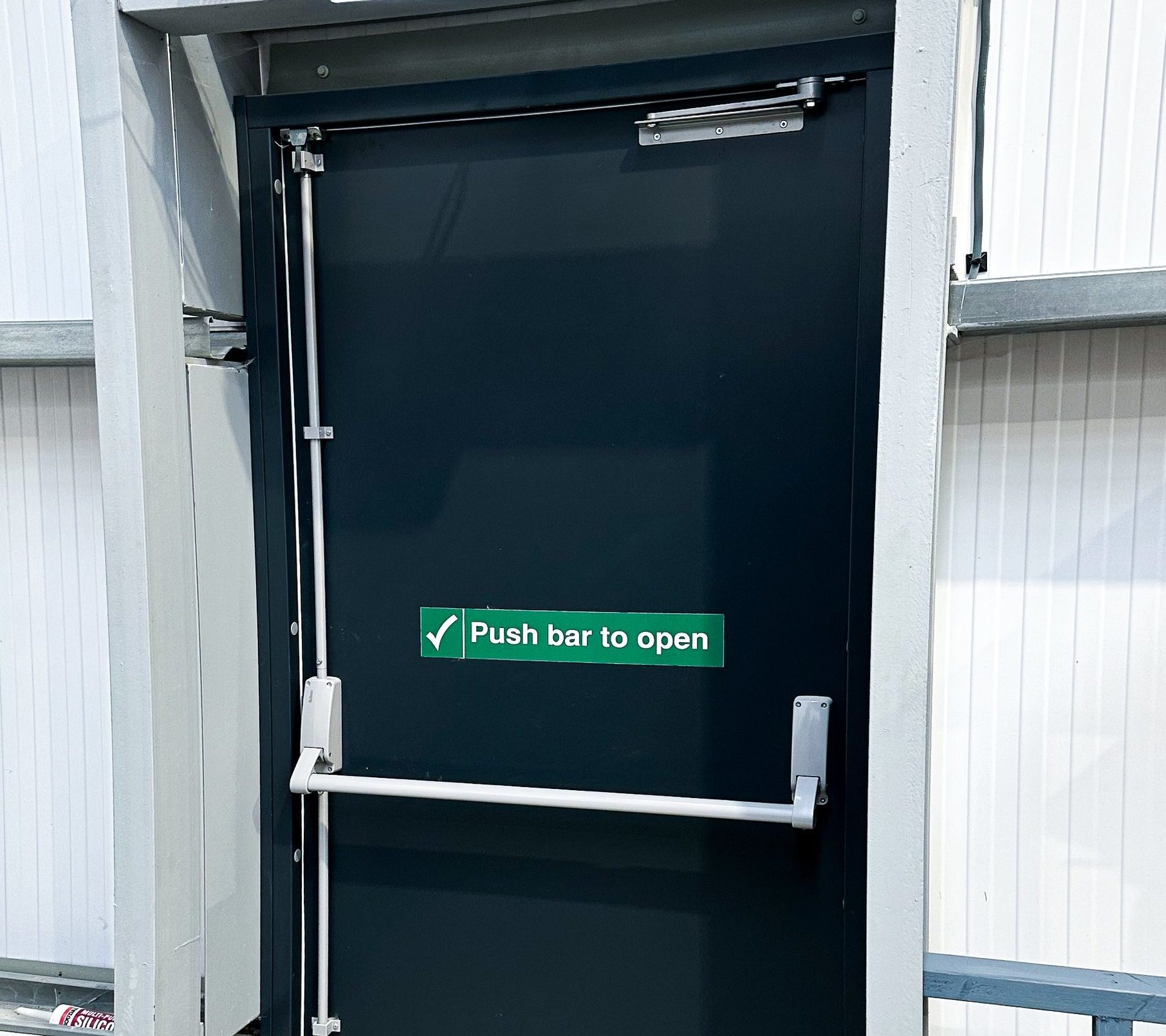
Steel Fire Doors
Steel fire doors are ideal for environments where strength, durability, and resistance to impact are just as important as fire protection. They’re typically used in factories, warehouses, and service areas with higher fire risks or exposure to the elements.
Aside from their superior strength, steel fire doors can also provide excellent acoustic insulation and security. Many are tested to both fire and security standards, offering all-round protection in high-demand settings.
Glazed Fire Doors
Glazed fire doors use fire-resistant glass to allow visibility and natural light without compromising safety. These are perfect for corridors, offices, and reception areas, where transparency is key to monitoring movement while still maintaining fire compartmentation.
The glass used in these doors undergoes specialist testing to resist high temperatures and thermal shock. Depending on the design, glazed panels can cover a small vision strip or almost the entire door — while still meeting FD30 or FD60 ratings.
Composite Fire Doors
Composite fire doors combine materials such as timber, steel, and reinforced cores to achieve the ideal balance of performance, durability, and design flexibility. They are low maintenance, resistant to warping, and can replicate the look of real wood — making them perfect for both commercial and residential settings.
They’re also highly energy efficient, providing thermal insulation and soundproofing alongside fire resistance.
Types of Fire Doors by Operation
Self-Closing Fire Doors
Every fire door must be able to close itself automatically to perform its function. Self-closing fire doors feature a mechanical closer that ensures the door returns to a fully closed position after being opened. This prevents fire and smoke from passing through in the event of an emergency.
Automatic Fire Doors
Automatic fire doors remain open under normal conditions but close automatically when the fire alarm is triggered. They are commonly used in hospitals, schools, and high-traffic corridors where accessibility is essential. These doors are connected to the fire detection system, ensuring they react instantly when smoke or heat is detected.
Power-Operated Fire Doors
Power-operated fire doors use electric, hydraulic, or pneumatic systems for smooth operation. In the event of a power failure or fire alarm activation, the doors revert to a closed position to maintain the building’s fire barrier integrity. These are often seen in commercial or public buildings where accessibility and safety must work hand in hand.
Sliding & Rolling Fire Doors
Sliding and rolling fire doors are used in environments that require wide openings — such as warehouses, loading bays, or manufacturing facilities. They operate horizontally, closing automatically when triggered by heat or smoke sensors. Their design saves space and allows efficient fire separation in industrial layouts.
How to Choose the Right Fire Door
Selecting the correct type of fire door for your property depends on several factors:
- Building type and usage – Residential, commercial, or industrial environments have different safety requirements.
- Occupant needs – In hospitals or care homes, accessibility and safe evacuation routes are priorities.
- Fire strategy – The door’s rating must align with your building’s compartmentation plan and fire escape routes.
- Aesthetic goals – Timber or composite doors are ideal where appearance matters as much as safety.
- Environmental exposure – For external or heavy-use areas, steel doors are typically the most durable option.
It’s essential to ensure all fire doors are installed and maintained by certified professionals. Even a high-rated door will fail if incorrectly fitted, damaged, or obstructed.
Final Thoughts
Understanding the different types of fire doors helps ensure your building is properly protected against fire and smoke. Whether you need sleek glazed doors for an office, robust steel doors for a factory, or timber designs for residential use, the right choice depends on your layout, risk level, and compliance requirements.
At ProFire Plus, we supply, install, and maintain certified fire doors that meet all UK regulations — giving you peace of mind that your property and people are safe.